If you are looking for a soap that cleans without leaving your skin feeling tight and dry by evening, you are not alone. Across India, many of us have grown up using the same commercial bars our parents bought from the local kirana store. They foam well and are easy to find. But after years of hard water, dust, pollution and changing weather, more families are noticing that their skin feels stripped rather than clean.
Natural handcrafted soaps take a different route. They are made in small batches with plant oils and traditional bases, and they keep the good parts of the soap-making process instead of removing them. For everyday skin health in Indian conditions, this difference matters more than most people realise.
What Happens When You Use Regular Commercial Bars Every Day
Most commercial bars sold in India are not traditional soap. They are detergent bars made for long shelf life and high lather. Manufacturers often use sodium lauryl sulfate (SLS) or similar surfactants, synthetic fragrances, and preservatives. These help the bar look and feel consistent, but they also remove natural oils from the skin surface.
In places with hard water—common in many parts of Rajasthan, Gujarat, Delhi-NCR and other cities—the combination becomes harsher. The bar tries to cut through mineral deposits and dirt, yet it also disrupts the skin’s moisture barrier. After a shower, skin can feel squeaky. By afternoon, many people reach for a thick lotion just to feel normal again.
This cycle is familiar in Indian homes. We have helped many families who switched only their soap and noticed less tightness, especially during winter dryness or monsoon humidity.
Why Natural Handcrafted Soaps Work Differently
Natural handcrafted soaps are made by saponifying plant oils with lye in small batches. When done correctly through cold process, the reaction creates glycerin as a natural by-product. Glycerin is a humectant—it draws moisture to the skin. Commercial makers often extract this glycerin and sell it separately for other products. Handcrafted bars keep it inside the soap.
The result is a bar that cleanses while supporting the skin’s barrier instead of stripping it. Bases such as goat milk and shea butter add further nourishment. These are not fillers; they contribute fats and proteins that many commercial bars replace with synthetic emollients.
At Noor’E Veda, every bar is handcrafted in small batches with this approach. The brand focuses on traditional nourishment rather than chemical shortcuts that leave skin dependent on extra products. You can explore the full range of natural handcrafted soaps on the website.
Key Differences That Matter for Indian Skin
Indian skin faces specific daily stresses: high UV, dust and pollution in cities, hard water, and sharp seasonal shifts between dry winters and humid summers. These conditions make the choice of cleanser more important than in milder climates.
Moisture barrier and glycerin: When glycerin stays in the bar, skin retains more water after washing. This is useful in dry months when many people in North India notice flaking on elbows, legs and face. It also helps in humid regions where over-cleansing can still leave skin dehydrated.
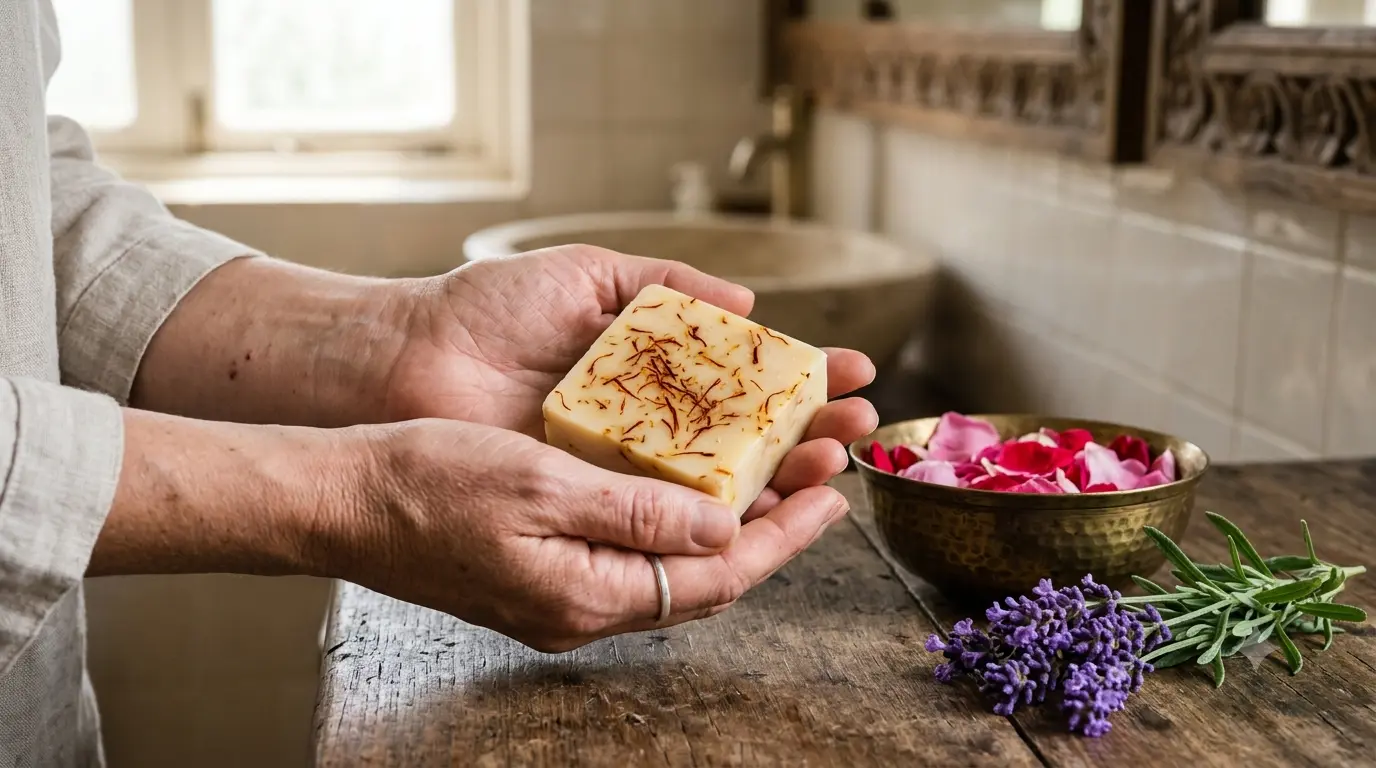
Fewer irritants: Commercial bars often contain synthetic fragrances and colourants that can trigger redness or itching, especially on sensitive or eczema-prone skin. Natural handcrafted soaps rely on essential oils or botanical extracts. Ingredients such as saffron, rose, lavender or manjistha are chosen for their traditional skin-supporting roles rather than strong artificial scent.
Process and freshness: Small-batch cold-process soaps are cured for several weeks. This allows the bar to harden and the excess lye to neutralise fully. Mass-produced bars prioritise speed and consistency, which can mean more alkaline or detergent-heavy formulas. For people who notice tightness after every wash, the gentler process often makes a noticeable difference within a week or two.
Ayurvedic ingredients for local concerns: Many Indian brands of handcrafted soap incorporate herbs long used in Ayurveda. Neem and turmeric support clearer skin for those dealing with occasional breakouts from pollution or humidity. Saffron and rose are valued for radiance and calm. These are not magic fixes, but they form part of a daily routine that does not fight the skin’s natural state.
Practical Tips for Switching to Natural Handcrafted Soaps
If you are considering the change for everyday skin health, start simply.
Keep the same shower routine for the first few days. Use the handcrafted bar on the body and notice how skin feels thirty minutes later, not just immediately after rinsing. Many people report less need for heavy body lotion.
In hard-water areas, rinse well and follow with a light oil or the same soap’s residual moisture rather than a harsh scrub. Hard water already challenges the barrier; a gentler cleanser reduces the extra load.
For face use, choose a bar specifically suited to facial skin or dilute the lather. Not every body bar is ideal for the face, especially if you have active acne or very reactive skin.
Store the bar on a draining soap dish so it dries between uses. This extends its life and keeps it firmer. In humid monsoon months, this small step prevents the bar from becoming too soft.
We have seen families in different parts of India make this switch gradually—one person first, then the whole household—because the daily feel of the skin improves without extra effort. You can check more details and current offerings on our website to see which bars align with common concerns such as dryness, pigmentation support or gentle cleansing.
Everyday Skin Health in Different Indian Conditions
In dry winter months across North and Central India, a glycerin-retaining bar with shea or goat milk helps reduce the tight, ashy feeling many people accept as normal. In coastal or high-humidity regions, lighter formulations still clean without leaving a greasy film that can attract more dust.
Pollution in cities deposits fine particles on the skin. A mild natural soap removes them without the aggressive surfactants that can make the barrier more vulnerable the next day. Over months, this consistent support often shows as fewer episodes of irritation or excessive dryness.
The ritual aspect also matters. Handcrafted bars tend to have a cleaner, botanical scent and a smoother feel in the hand. Many people describe the evening wash as calmer rather than rushed. This is not marketing language—it is simply what happens when the product does not fight the skin.
When Commercial Bars Still Have a Place
Not every situation demands a switch. Travel, certain medical advice, or preference for very long shelf life may keep commercial options useful for some. The point is awareness. For daily home use where skin health is a priority, the retained glycerin, absence of harsh detergents, and traditional bases give natural handcrafted soaps a clear practical edge in Indian conditions.
Natural handcrafted soaps are not a trend. They are a return to a way of cleansing that supports the skin barrier instead of constantly repairing the damage caused by stripping it. In Indian homes dealing with hard water, dust and shifting seasons, that daily difference adds up.
If you want to see how these soaps are made and which ones suit everyday skin health, visit https://nooreveda.com/ and explore the range.
Frequently Asked Questions
Are natural handcrafted soaps better for dry skin caused by hard water?
Yes, for many people. Because they retain natural glycerin and avoid strong surfactants, they cleanse without stripping as aggressively as most commercial detergent bars. Combined with good rinsing, they often leave skin feeling more comfortable in hard-water areas. Visit the website to see bars made with nourishing bases suited to everyday dryness.
Do handmade soaps help with sensitive skin in Indian weather?
They can. By skipping synthetic fragrances and common irritants, they reduce one common trigger for redness or itching. Small-batch Ayurvedic options with gentle botanicals further support the barrier. Patch-test any new bar, as individual responses vary.
How long does it take to notice a difference after switching?
Most people feel a change in tightness or dryness within the first week. Barrier improvement and overall comfort usually become clearer after two to four weeks of consistent use. Skin that has been over-cleansed for years may need a little longer to settle.
Can the whole family use the same natural handcrafted soap?
In many households, yes. Choose a mild bar and observe each person. Children and those with very reactive skin may prefer simpler formulas. The website lists options by concern so you can match them more easily.
Is cold-process soap different from regular handmade soap?
Cold process keeps temperatures lower, so more of the natural glycerin and botanical qualities remain intact. It is the method preferred by many small-batch makers who focus on skin nourishment rather than speed.
Do these soaps work in both dry winters and humid summers?
Yes. The retained moisture support helps in dry months, while the absence of heavy synthetic residue keeps skin comfortable in humidity. Seasonal preference can guide the choice of specific ingredients such as richer butters or lighter botanicals.
Where can I learn more about specific Ayurvedic handcrafted bars?
You can browse the full collection and ingredient details directly from our website. The team also shares practical guidance for different skin concerns common across India.